Mr. Cowherd is 9-12 ATS this year.
2026-27 NFL Computer Predictions and Rankings
Cracking the NFL Betting Code
Colin Cowherd’s Blazing 5 Picks for NFL Week 5 2021
October 9, 2021 by
Colin Cowherd’s Blazing 5 Picks for NFL Week 4 2021
October 1, 2021 by
How to lock Facebook profiles from non-friends
September 29, 2021 by
 Facebook’s “profile lock” feature looks great and helps protect your profile from unsolicited strangers. The Facebook “profile Lock” feature is not only cool, it also helps to secure your profile against unsolicited strangers. What does a locked Facebook account look like? A Facebook locked profile is something you’ve probably seen. A locked profile is different from a normal one. Unpublished posts are not displayed on a locked profile. Although you can still view the user’s profile name, photo and timeline, you wont be able to scroll down or see their public timeline. It will display a notice like this: “This user locked his account.” The information you can see will be limited. The difference between these profiles can be seen below: Standard profile vs. Locked Profile Standard Profile and vs. What Happens if a Facebook Profile is Locked? Locked Facebook Profile What Happens When a User’s Facebook Profile Is Locked? The information displayed on a profile of a user that isn’t your Facebook friend will be limited if you want to view it.
To view more information, you must add the user to your Facebook friend list. Thesishelpers.com notes that you can however view your mutual friends. Messenger allows you to message the user. The benefits of locking your facebook profile You can block strangers (and even friends) from accessing your profile and posting activity. While you can restrict the visibility of your audience or limit your posts, you don’t need to lock your profile for each post. Everyone will see every post that you post on your timeline, including those that are public. This allows you to post and not worry about whether your privacy settings are correct. Your profile is secured so that only your closest friends can see your full-sized profile picture and cover photo. Also, strangers will not see your stories. How can you lock your Facebook account?
Locking your Facebook account is easy. Simply open your Facebook mobile app. Next, press the aMenua button on your Facebook app. Tap on your profile name to see a complete view of your profile. After you have viewed your profile, click on the three dots icon next to the aEdit Profila button. You will be able to view your account settings. This will allow you to see the activity log, archive, and status. Select aProfile Settings and search for the option to aLock Your Profile. It will then prompt you to confirm that your action was taken. You can confirm it by clicking on aLock My Profilea.
After you see a message saying aYou locked the profile, a click OK to lock your profile! To see a preview of your profile to non-friends, you can use the aView asa option. It is also available in profile settings. Notice: These steps were done on iOS 14.6 of the Facebook app for iPhone. If you’re using an Android phone or a computer, the process could be slightly different. Select “Lock Profile” to confirm your selection. Make sure to confirm what you have selected by clicking “Lock Profile”. How do you lock your Facebook profile? If you didn’t find the aLock Profila option in your region after following the steps above, then it is possible that this option isn’t yet available. You can use the following solution if this happens: First, check your Facebook app and ensure that it is current to your device. Install a VPN application and activate it. Change your VPN region from the US, India, and UK. Any trusted and secure VPN application that is available on the App Store can be used. Once you have turned on your VPN, return to the profile lock steps. You should now see the aLock Profilea option. While this may not work for all users, it’s worth considering, especially if you already use a VPN on your smartphone. The best thing about this workaround? You can lock your profile even if you have your VPN turned off. A locked profile gives you more privacy! This is it! A locked Facebook profile allows you to enjoy greater privacy and can be more active on social media. It is well worth looking into this feature if you haven’t already. If you don’t like the privacy setting, you can disable it.
Colin Cowherd’s Blazing 5 Picks for NFL Week 3 2021
September 24, 2021 by
Understanding DFS Point Scoring
September 23, 2021 by
 Introduction
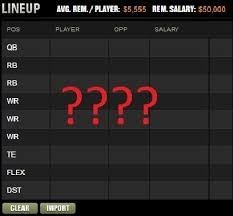
Daily fantasy sports are much more action-packed than traditional fantasy sports. It happens across a much shorter timeframe too, but this can confuse how DFS games are scored. The Internet has created massive communities oriented around every sport and the fantasy playoffs in them.
We’re focusing on fantasy football scoring here, the most popular form of fantasy sports that is played in America. You can see NFL daily fantasy sports in action online. Here we have information on how those fantasy games are commonly scored, along with pertinent definitions that beginners will want to know.
DFS Point Scoring
Here’s a rundown of how different events in a game are scored under generalized DFS rules. Remember that the specific rules may change depending on who you’re using to manage your fantasy sports games.
| Rushing yards made = 0.1 points | 0 points allowed = 10 points |
| Rushing touchdowns = 6 points | 1-6 points allowed = 7 points |
| Passing yards made = 0.04 points | 7-13 points allowed = 4 points |
| Passing touchdowns = 4 points | 14-20 points allowed = 1 point |
| Receiving yards = 0.1 points | 21-27 points allowed = 0 points |
| Receiving touchdowns = 6 points | 28-34 points allowed = -1 point |
| Return touchdowns = 6 points | 35+ points allowed = -4 points |
| Safeties = 2 points | Field goals from 0-39 yards = 3 points |
| Sacks = 1 point | Field goals from 40-49 yards = 4 points |
| Interceptions = -1 point | Field goals from 50+ yards = 5 points |
| Interceptions made = 2 points | |
| Receptions = 0.5 points | |
| Blocked punt/kick = 2 points | |
| Fumbles lost = -2 points | |
| Fumbles recovered after touchdowns = 6 points | |
| Opponent fumbles recovered = 2 points | |
| Kickoff return touchdowns = 6 points | |
| Punt return touchdowns = 6 points | |
| Two-point conversion passes = 2 points | |
| Two-point conversions scored = 2 points | |
| Extra-point conversions = 1 point | |
| Extra point return = 2 points |
Important Definitions
To properly understand daily fantasy sports, you should know some important definitions that enable you to figure out what’s going on. Here are several:
$/Point: The salary of players, divided by how many fantasy points they score.
50/50: Where half the field is paid evenly, usually double the entrance fee.
Algorithm/Model/Projection: Terms for the equations used to calculate players’ statistical performances in a game.
Balance: A lineup that’s filled with mid-price range players.
Bankroll: The money you use when betting or playing fantasy sports.
Ceiling: The max points expected from a player based on past performances.
Chalk: A player/team/game expected to be popular with the crowd.
Dart Throw: A longshot play that relies on a player reaching a higher target score.
Double-Up: Contests where your entry fee is doubled if you’re in the top 50%.
Fish: A new (and inexperienced) DFS player.
Field Size: The number of people in a contest.
Floor: Opposite of ceiling, the lowest points expected from a player based on past performances.
Guaranteed Prize Pool: Tournaments with a guaranteed minimum prize pool.
High Stakes: Contests with a higher entry fee, typically $50.
Head-To-Head: A contest between two DFS players, one on one.
Late Swap: When you can switch players in and out after the first game has begun.
Lean: A preference towards one position over others, e.g., you lean X player over Y player.
Min Salary: The minimum amount a player costs on the site.
Mass Multi-Entry: A.K.An MME, where DFS players enter lineups into a contest until they hit the maximum limit.
Multi-Entry: Where one enters more than one lineup into a contest.
Overlay: When a tournament pays out more money than they receive.
Pay Up: To choose high-price players instead of mid or lower ones.
Player Prop Bet: Oddsmaker lines that focus on one player and their performance.
Punt: Lower-priced players that could be successful but are also disposable.
Quintuple Up: Where the contest payout is five times the entry fee.
Reach: A chosen player/play expected to make an unexpectedly good performance.
ROI: Return On Investment, how much money you make on your initial investment.
Sharks: Experienced DFS players who know what they’re doing.
Single-Entry: Contests with one entry limit.
Sleeper: Players being overlooked who could make a good play.
Stacking: Choosing multiple players from the same teams/games.
Tilt: Disappointment/frustration felt by bettors and DFS players whose positions don’t pay off.
Tournament: Competition between many players. In DFS, tournaments don’t usually have tiers like they traditionally do.
Train: When a DFS player enters the same lineup multiple times into multi-entry games.
Triple-Up: Tournaments that payout three times the entry fee to each winner, similar to double-ups and quintuple-ups.
Upside: The expectation that a player will exceed the projections given by oddsmakers/DFS hosts.
Value: Players that should be priced higher than they are due to certain opportunities.
Viable: When a player has a reasonable expectation of reaching their target score.
8:20 p.m. ET: Carolina Panthers at Houston Texans 9-23-21 Smackdown!
September 23, 2021 by
The Panthers (2-0 SU, 2-0 ATS) have been impressive through two games, taking care of the Jets 19-14 as 3.5-point home favorites in the opener and then upsetting the Saints 26-7 last week as 3-point home dogs. Meanwhile, the Texans (1-1 SU, 2-0 ATS) have also covered both of their games thus far, upsetting the Jags 37-21 as 3.5-point home dogs and then losing to the Browns 31-21 last week but covering as 13.5-point road dogs. This line opened with Carolina listed as a 7-point road favorite. A combination of early sharp money and steady public support has pushed Carolina up from -7 to -8. Before Tyrod Taylor got hurt, the early line was Carolina -3.5. With rookie Davis Mills starting, the opener was adjusted to -7.
If you missed the early number on the Panthers, the Texans could be worth a look as a buy-low value play. The public is all over Carolina, which gives Houston contrarian value in a heavily bet primetime game, plus an inflated line at 8. Dogs are 21-11 ATS (66 percent) this season. Primetime dogs are 4-2 ATS this season and 32-21 (60 percent) since 2020. Alex Kemp, the lead official, has historically favored home teams (27-20, 58 percent ATS).
If you like the Panthers, consider them in a teaser. You could tease Carolina down from -8 to -2, which goes through a pair of key numbers in 7 and 3. Going through multiple key numbers is the wiseguy approach to teasers.
The total opened at 44 and despite the public taking the over, the line has fallen to 43. This reverse line movement signals some smart under money. One interesting trend we’ve seen this season: primetime overs are a perfect 6-0.
(VSIN.Com)

Zach Wilson: Boom or Bust?
September 2, 2021 by
WATCH: NFL Betting Panel Discussion
August 28, 2021 by
10 Easy D-I-Y Hacks to Keep the Workspace Clutter-Free
August 26, 2021 by
 In the remote working culture, sometimes it becomes difficult to organise the workspace. Many individuals tend to think that it takes a lot of time to remove the clutter. But, with the proper office desk organisation idea, it can be done within an hour. An organised work desk increases productivity and concentration. And, a contaminated workspace can affect their health and performance. Moreover, office clutter and disorganisation can increase stress, burden and anxiety.
Researchers found out that an individual spent 4.3 hours finding a file from a cluttered desk. Moreover, an average employee wastes an hour to present the necessary files on time. And, for these reasons, everyone should consider cleaning the home desk regularly. It becomes difficult to pay attention at work when there is a pile of papers on the desk. Therefore, keep the essential papers in one place from where you can find them easily.
There are plenty of DIY organisers which you can use to store office accessories. And, it won’t break your bank to buy them. Spend a few bucks and tackle the desk clutter in the best possible way. Clean desks bring out the creativity of an individual.
Save time for organising the desk on the weekends by following a strategic plan. Here are a few home desk organisation ideas which you should take into consideration:
Before you get any of the organisation systems, prepare a list of accessories first. Currently, you might have plenty of things on the home desk. If there are a bunch of wires and cables, remove them immediately.
Do you use a notepad to write down the essential work-related information? Move that from the office desk and keep that in the drawer for a while. Along with these, you have to clear out the accessory that you use while working from home.
Place a cup and put the pens and markers over there instead of keeping them on the desk. Don’t keep the magazines, journals or newspapers on the desk; that’s not the right place. Instead, buy magazine holders and store the weekly magazines there. Further, you have to remove the small objects and router out of sight.
Do you have floating shelves near the workspace? No! Then, consider getting one. Keep the essential office files on the floating shelves. But, make sure there’s enough space to install this. To utilise the bank space of the home office, attach as many floating shelves as you can.
Moreover, you can store books and also magazines on the floating shelves. And, for organising the office clutter, and to improve the room’s appearance, use shelves. Contact with an interior Design Dubai expert to decorate the floating shelves.
While working from home, you might have to deal with paper loads. And, not storing these paper files in the right place can cause a lot of problems. Use colour-coded filing systems to keep essential documents. Don’t keep the finance and medical bills in the same filing systems. Because, that can bring a lot of inconveniences while getting the required files on time.
Choose separate colours for the different types of files. It will make the desk organisation process less daunting. Take a blue filing system and put the tax-related papers there. You can keep the house maintenance documents in the red filing systems. Choose a green file to store the home appliance repair-related papers.
To keep the existing office mails, all in one place, nothing can be better than mail stations. You can get mail stations from online stores. But, you can also create these organisation systems by watching D-I-Y video tutorials. Arrange the necessary materials that will be required to create mail stations.
Choose an eye-soothing colour which will look good on the home office’s wall. Additionally, you can keep the monthly utility bills in the mail stations as well. Don’t forget to check the emails or files once a week.
Cubbies can be the ideal organisational tool where you can keep valuable items. Starting from art pieces to hard-to-store inventories, cubbies can hold everything. Moreover, it can enhance the value of the house by keeping it clutter-free. You can also consider keeping cardholders or filing systems in the cubbies.
Additionally, you can fill the blank squares of the cube shelves with books. Choose a trending in-built cubbies design after consulting with an interior designer. Place decorative storage baskets inside the cubbies to hide the unwanted items. Further, select a unique colour palette and add a variety of textures to make the cubbies innovative.
Similar to cube shelving systems, bins also keep the office accessories in perfect order. Fix the messy condition of the home office by installing bin organisation systems. And, in these bins, you can craft a lot of office essentials with ease.
But, in this sort of organising system, you can’t keep large files or documents. To store supplies like pen, paperweight, charger and notepads, bins can be ideal. Choose unique designed bins and place those near the home office desk. Make separate bins for keeping the different office accessories. Select a white bin organising system that will provide a no-cluttered look.
Do you have space on the top of the home office desk? Then, utilise that by installing organisers to the living room’s wall. Moreover, you can consider adding a board to the wall to attach the to-do list. Additionally, you can also keep a calendar or sticky notes on that board.
Below that board, keep a set of same-sized mason jars. Fill those jars with the pens, pins, and other necessary items that you need while working. Change the scattered look of the home office by considering this storage solution.
If you have a low budget and have adequate wall space, consider installing wall cabinets. With built-in cabinets, individuals can keep files and papers easily. Moreover, these sorts of organisational systems help to keep the desk clutter-free.
Contact an interior designer to get the best-designed wall cabinets. These experts know which built-in cabinet design will look perfect in the workspace. Do you already have cabinets, but are you running out of space? Customise that, and rebuild new ones to fit the essential office supplies.
Creating a command centre in the home office will help you to stay organised. Thus, consider keeping the printer, files, etc. You can include a calendar or the work schedule in the office station.
Preserve the essential items in one place to get immediate access. Prevent them from getting misplaced and remove the mess by taking necessary actions. Add a small table beside the desk and keep the items there.
Opt for buying a small-sized caddy and put that on the home office desk. Consider keeping the work essentials in a caddy instead of scattering them on the desk. But, don’t add too many containers to the desk; that won’t look good.
Keep the pencils, pens, tapes, glue, scale, markers and other items inside the caddies. Moreover, this desk organiser tool comes in different sizes and colours. Choose the right one and efficiently manage the clutter.
What else should You do to Organise the Home Desk?
Don’t keep the papers or documents on the desk that you no longer require. Consider keeping them in the cabinets or some other files. Get a paper holder and go through the piles of paper first.
After that, choose the ones that you will need while working and keep those in a paper folder. It’s the best way to hide the unwanted office paperwork that is lingering around the workstation. And, for more home desk organisation ideas, contact an expert now.
Also Recommended: The Best Interior Designs to Make Your Home Look Elegant
How to Win Your NFL Survivor Pool
August 26, 2021 by
Best NFL In Game Dancing Ever!
August 25, 2021 by
Don’t worry: Dance!
We self-actualize, we vibrate, we are reborn. Today, science tells us that the essence of nature is freedom. To wander the story is to become one with it.
It can be difficult to know where to begin. The quantum matrix is calling to you via ultrasonic energy. Can you hear it? Child, look within and ground yourself.